Citizen Science

Encouraging Science with our Children

So much science education happens in informal ways–outside of the classroom. These experiences can be so valuable and sometimes even more influential than the classic approaches taken for so long by the public school system of the American culture.
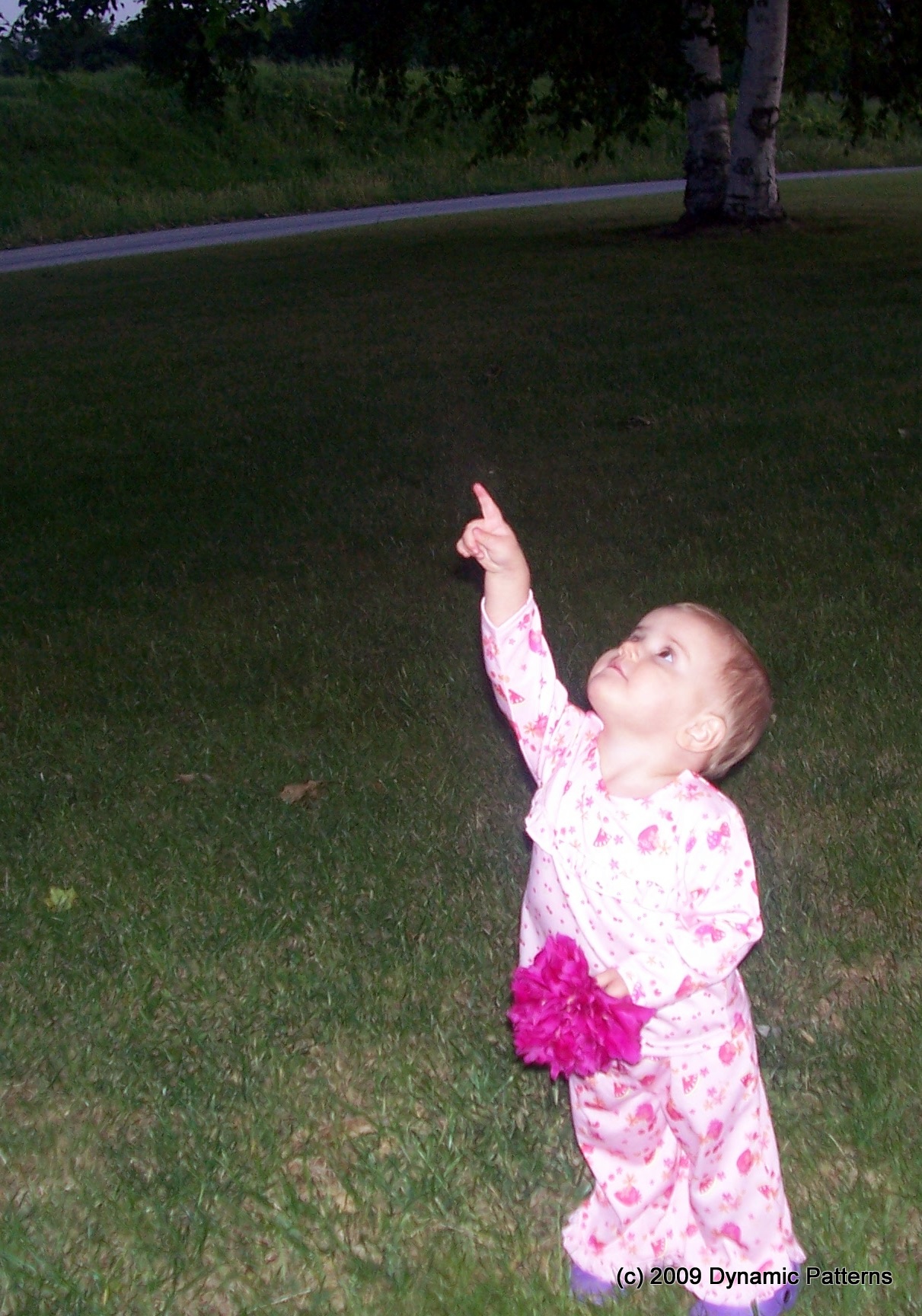
Successful informal educational opportunities can start right at home between parents and their children at the earliest ages. From simple questions to make a child think about what is happening around us to getting directly involved with exciting citizen science projects in our community, there are so many opportunities that can be presented to a young mind that can leave a lasting impression.

A growing focus on the importance of informal education is emerging, and citizen scientists can be on the forefront of this valuable movement. The National Academies Press has published materials on the issue, and is helping to create new studies and information on how informal educational approaches might be more thoroughly developed.

In their latest newsletter (subscribe), NAC featured an interesting survey of readers who had experiences as a child of a lasting memory of an informal educational experience. The following are some of their favorite responses…

“‘My dad waking us all up at 2 a.m. on a freezing winter night to come out and see the Northern Lights; I was 4 years old and never forgot.’

‘Studying pond water samples with a friend’s microscope, drawing my observations, then going to the library to find the names of the microbes (amoeba, diatoms, etc.) during the summer between 3rd and 4th grade.’

‘Making an electromagnet out of a piece of wire, a nail, and a battery.’

‘The original Mr. Wizard television program set my future path toward science. Each episode presented scientific concepts through interesting and understandable demonstrations that, for the most part, the young viewer was encouraged to try at home. This was really exciting TV!’

‘The first time I learned to mix baking soda and vinegar to make carbon dioxide and the resulting foam overflowed on to my parent’s kitchen table.’

‘A lifetime of interest came from my father’s simple question: ‘Why is it so hard to push this boat into the water?’ 40 years later, I am still pursuing wave flows and resistance.’

‘Sitting on the front porch with my father and siblings counting the seconds between the lightning flash and the thunder that followed. We estimated how far away the lightning strike was and learned math as well as science.'”

Each of these special memories should be an inspiration for parents and how we can contribute to positive informal science education every day. If you and your children have experienced meaningful informal science education moments–no matter how small–please tell us about it by posting a comment here on DPR AmSci Journal.

Learn more about The National Academies Press [ VISIT ] and the National Academy of Sciences [ VISIT ]

Encouraging Science with our Children Read More »

Students from Around the World Monitor LCROSS for NASA

In a little more than two weeks, NASA will have an expensive hunk of metal slam into the Moon… the resulting plume will be closely observed in hopes to learn more about the possibility of the existence of water ice (read more and learn about how you can participate…). As the LCROSS vessel makes it way toward its impact site, NASA needs assistance with tracking due to its steep orbit; they only have brief and infrequent time frames to monitor the trajectory using their Deep Space Network of radio antennas.

So, who better to ask for more listening help than school kids from around the globe interacting remotely and on-site with the GAVRT program. Located in Apple Valley, California (view map), the antenna is a collaboration between the Lewis Center for Educational Research, NASA, and the Jet Propulsion Laboratory.

Teachers from around the world, including home schoolers, may sign up for free through the Lewis Center’s website and take part in their LCROSS curriculum. This is a wonderful opportunity for young science students to get hands-on experience in an important scientific field and to support NASA in a valuable way.

And if this program doesn’t directly create excited new young scientists, then it should certainly help drive these students’ personal interest and appreciation for science as they become vital and participating citizens in the future.

“School Kids Track LCROSS” :: Science@NASA :: September 21, 2009 :: [ READ ]

Join the Lewis Learning LCROSS Curriculum [ VISIT ]

Students from Around the World Monitor LCROSS for NASA Read More »

MIT Students Take Pictures from Near-space for $150

Take two students from MIT; now, take two students from MIT with only $150 in their pockets and a notion to use a little science to make a little art, and what do you get? … Eight gigabytes of near-space photographs and an experience to share to the rest of the world of citizen scientists!

Oliver Yeh, Justin Lee, and Eric Newton set out to take some amazing pictures, and they didn’t have much cash to get the job done. So, with a lot of ingenuity, a little scrounging around the dorm room, they were able to create a secure — and legal — launch vehicle that contained a used Canon A470 camera and sent it up 17 1/2 miles to take some excellent images capturing the curvature of the Earth. With a lot of luck, and little help from an GPS-enabled pre-paid cell phone for tracking, they found their vehicle (a Styrofoam container with a couple of hand warmers inside!) only 20 miles away from the launch site.

The group plans to post a detailed instruction guide on how they accomplished the launch, and will be providing the information free of charge. We will be sure to link to the instructions from DPR, and maybe we’ll be seeing in the near future more balloons flying high from citizen scientists around the world.

“The $150 Space Camera: MIT Students Beat NASA On Beer-Money Budget” :: Wired Magazine :: September 15, 2009 :: [ READ ]

Project Icarus [ VISIT :: FLIGHT PICTURES ]

Step-by-step instructions coming soon!

Update 9.21.2009…

Time-lapse Images from Project Icarus

MIT Students Take Pictures from Near-space for $150 Read More »

Follow the NYC Cricket Crawl Results Live!

Several days ago, we featured the NYC Cricket Crawl citizen science project sponsored by the Discover Live organization … and with a little rain delay from last night, tonight is now the night for event!

The exciting part for everyone not living in the greater New York City area (although, it certainly is a large area!), is that we can watch the results coming in live. So, check out all of the chirping action, and watch the latest in citizen science produce real results for real research!

Watch / Listen Live

(click on one of the links to the “Cricket Crawl Maps”)

Follow the NYC Cricket Crawl Results Live! Read More »

Citizen Scientist Launching a Satellite… to make Music!

Citizen Science activities certainly don’t have to cost a lot of money, and most of the projects we discuss here at DPR are essentially “free” to perform… but this project… now, this project does cost some money. But, it’s pretty darn awesome. And, following this line of extreme citizen science would be more tuned for a lager group or team who can contribute more financial assistance and expertise.

This is the ultimate model rocket launch, performed by the professional NASA astrophysicist by day and citizen scientist by night, Dr. Alex Antunes. Here, he is merging science with music with the plan to build an ionospheric detector with a device to convert the input signals to a MIDI stream that can be picked up by HAM radios. We’ll be able to “listen” to low-orbital space music for as long as the little satellite can survive.

Like I said… pretty, cool, right?

Follow the project on the blogs listed below, and wish the team great luck for a successful launch in 2010!

Project Calliope :: official launch website :: [ VISIT ]

Follow the progress on the launch blog :: [ VISIT ]

The TubeSat Personal Satellite Kit from Interorbital Systems [ VISIT ]

Citizen Scientist Launching a Satellite… to make Music! Read More »

Citizen Science Family Leads to Discovery of a Lost Bug

A once-in-a-lifetime opportunity in citizen science was certainly not on the minds of 6-year-old Alyson Yates and her mom, Kate, when they stepped out into their back yard one day to scout for ladybugs. But, their effort that day lead to a critical discovery that the Lost Ladybug Project from Cornell University had been long awaiting.

What the Yates found was the elusive nine-spotted ladybug, likely to have been overtaken in the United States by the Asian seven-spotted bugs imported in the 1970s and 80s to assist with crop pest control.

Now these little red fairytale creatures are living the high-life in Ithaca and breeding like wildfire. The hope is that the researchers will discover the true cause of the drastic decline of our classic native ladybug, and what might be a way to bring them back to our backyards.

Read more about this great success story of citizen science, and find our more about how you can participate in the Lost Ladybug Project…

“NY researchers breeding rare native ladybugs” :: Yahoo! News – Associated Press :: September 5, 2009 :: [ READ ]

The Lost Ladybug Project [ VISIT ]

Citizen Science Family Leads to Discovery of a Lost Bug Read More »

Last updated June 20, 2022