Inspiring Citizen Science

Critiquing the Role of the Citizen Scientist

The role of the citizen scientist is certainly still an evolving one, and will likely eternally be in flux. Before the era of professional scientists comfortably sitting at respected universities and industrial businesses, which is now commonplace, the majority of scientific exploration was accomplished by the non-professional, or “natural philosopher”. In fact, the term “scientist” wasn’t even used until William Whewell coined the term in 1833. These days, not everyone can–nor should–follow a career path into professional research, but there is no reason why someone interested in learning about and even participating in scientific exploration should be excluded from the opportunities.

There is certainly a difference between data processors and pure scientists. One person plugs and chugs through data using a pre-defined set of rules and regulations. The other actually develops those rules, thoroughly thinks about how to use them, and makes conclusions about the results with skill. But, the inherent sensation in this comparison–that one somehow is less interesting than the other–misses the real purpose and excitement of citizen science efforts.

We certainly don’t need everyone to be converted into fundamental science researchers to profess at ivy league institutions. There are certainly many of them out there already, and the job market these days for new hires offers some slim pickings. The point, rather, of citizen science is to inspire and generate a broad appreciation for science and the universe in which we live.

Involving a wider spectrum of the population with accessible, fun, and interesting projects–even if they “only” require human-level data processing, which, by the way, in the realm of pattern recognition, is still so much more impressive than computer-based data processing!–can only positively support everyone involved. In addition, a culture with a greater population who has increased levels of science appreciation will also benefit in long-term sustainability, assuming you believe that a more clear understanding of science across the majority of individuals can only bring about good things.

So, although the “crowd sourcing” and citizen science projects in effect right now (GalaxyZoo being a primary example) might not require each participant to be a full-scale experimentalist, it seems like absolutely nothing is lost. If fact, it seems that because of this non-requirement, even more is gained for the larger picture, since the hurdles for participation are not insurmountable for nearly everyone.

The more non-professionals involved in doing real science–even if it is “just” data processing–will bring a greater appreciation to these non-professionals, which will only help support the professionals down the road (say, through successful data analysis resulting in new discoveries, or the increased willingness of citizens to pay those higher tax dollars into the NSF and NIH).

“Citizen Science Isn’t Enough Science For Citizens” :: Michael White’s Adaptive Complexity, Science 2.0 :: June 8, 2010 :: [READ]

“Experts Weigh in on Crowd Science Trend” :: genomeWeb’s The Daily Scan :: June 4, 2010 :: [READ]

“The Growth of ‘Citizen Science'” :: The Chronicle of Higher Education :: June 3, 2010 :: [READ]

Critiquing the Role of the Citizen Scientist Read More »

Mars as Big as the Moon… this year only! (and next year, and the next)

Painted green by a flashlight, astronomer Dennis Mammana of California points out Mars to onlookers on Aug. 26, 2003, when Mars was particularly close to Earth. Photo credit: Thad V'Soske via NASA Science

Mars came particularly close to Earth back in 2003, and ever since we have been experiencing an annual email hoax convincing us that we will once again have a once-in-a-lifetime opportunity to see Mars as big as the Moon.

The cycle is happing again (view an interactive orbit map), with an expected closer encounter to happen this August. However, when you look up into the sky next month, you won’t see the Moon and the Red Planet together as temporary twins.

The close approach that occurred on August 27, 2003 was indeed the most near we have been to Mars in some 60,000 years. And, we are talking only 56 million kilometers (about 34.8 million miles) close. Take an important comparative note here that the Moon sits anywhere between about 363,000 and 406,000 km from Earth (learn more about the Moon). However, near approaches have routinely happened many times in between 58,000 B.C. and 2003, with more recent occurrences in 1845 and 1924, which were only around 50 thousand km less. Not so much difference in the scale of the Solar System.

What’s great about this particular hoax is that it is a perfect opportunity for citizen scientists to learn (or re-learn) about planetary orbits, and to help spread the excitement about the real physics of our Solar System. It is truly incredible that all of these massive objects are spinning around in such predictable harmony, and that anyone can discover so much information about how it all works.

For example, NASA’s Jet Propulsion Laboratory provides an online system, called JPL HORIZONS, for reporting the ephemeris (positions of astronomical bodies) for planets, planetary satellites, spacecraft, and other dynamic points throughout or Solar System. The distances can also be calculated to your personal location on Earth from anytime since January 4, 1900 up through January 3, 2100.

So, watch your email inbox carefully over the next several weeks (and make sure you don’t download any computer viruses), and help your friends learn more about the reality of our planetary neighbor Mars, since you–or your children–might travel there someday!

“Mars Spectacular” from Snopes.com :: [ READ HOAX Report ]

“Beware the Mars Hoax” :: Science@NASA :: July 7, 2005 :: [ READ ]

Powerpoint Presentation via Email Hoax received by DPR  :: Mars is So Close Hoax

Interactive Mars-Earth-Sun Orbit Map [ TRY IT ]
from Windows to the Universe (requires Flash)
Try running the simulation backwards to August 27, 2003 and see how close Mars really was.
How close was Mars on your birth date?

JPL HORIZONS Ephemeris Calculation System [ TRY IT ]

Mars as Big as the Moon… this year only! (and next year, and the next) Read More »

European Amateur Science Society Makes Major Dinosaur Discovery

For several years, a European amateur science group was on the trail of dinosaur prints and last spring they made a significant discovery. Now authenticated by scientists at Lyon University and France’s National Center for Scientific Research, the find is one of the largest and most well preserved prints from a sauropod estimated to be 150 million years old.

What’s particularly exciting about this finding–in addition to the pure excitement from being able to directly witness the movements of our planet’s once great giants–is that the possibility of important scientific progress coming from groups of amateurs and citizen scientists is so great. More organized citizen scientist groups must be developed around the world, and with this growth not only will scientific progress benefit, but the increased appreciation and understanding of science will begin to reach an even broader population.

For example, in the United States, the Society of Amateur Scientists is a national organization that will support the development of local and regional chapters, which is the absolute perfect opportunity for interested people to self-organize and generate some real science and generate some real science appreciation for the masses. Their current list of active local chapters is rather limited, but the time is ripe for growing local interest and regional society groups to become deeply involved in citizen science around the country.

In particular, this author is working on establishing a local chapter for the Central Illinois region, so if you are located in the area and would be interested in considering being a charter member of a new local chapter, please let me know.

Be inspired by the increasing number of successes of important results from citizen scientists and get more involved to see what wonderful science you may discover and experience.

“”Unique” dinosaur footprints discovered in France” :: Reuters / AP :: October 6, 2009 :: [ READ ]

European Amateur Science Society Makes Major Dinosaur Discovery Read More »

Encouraging Science with our Children

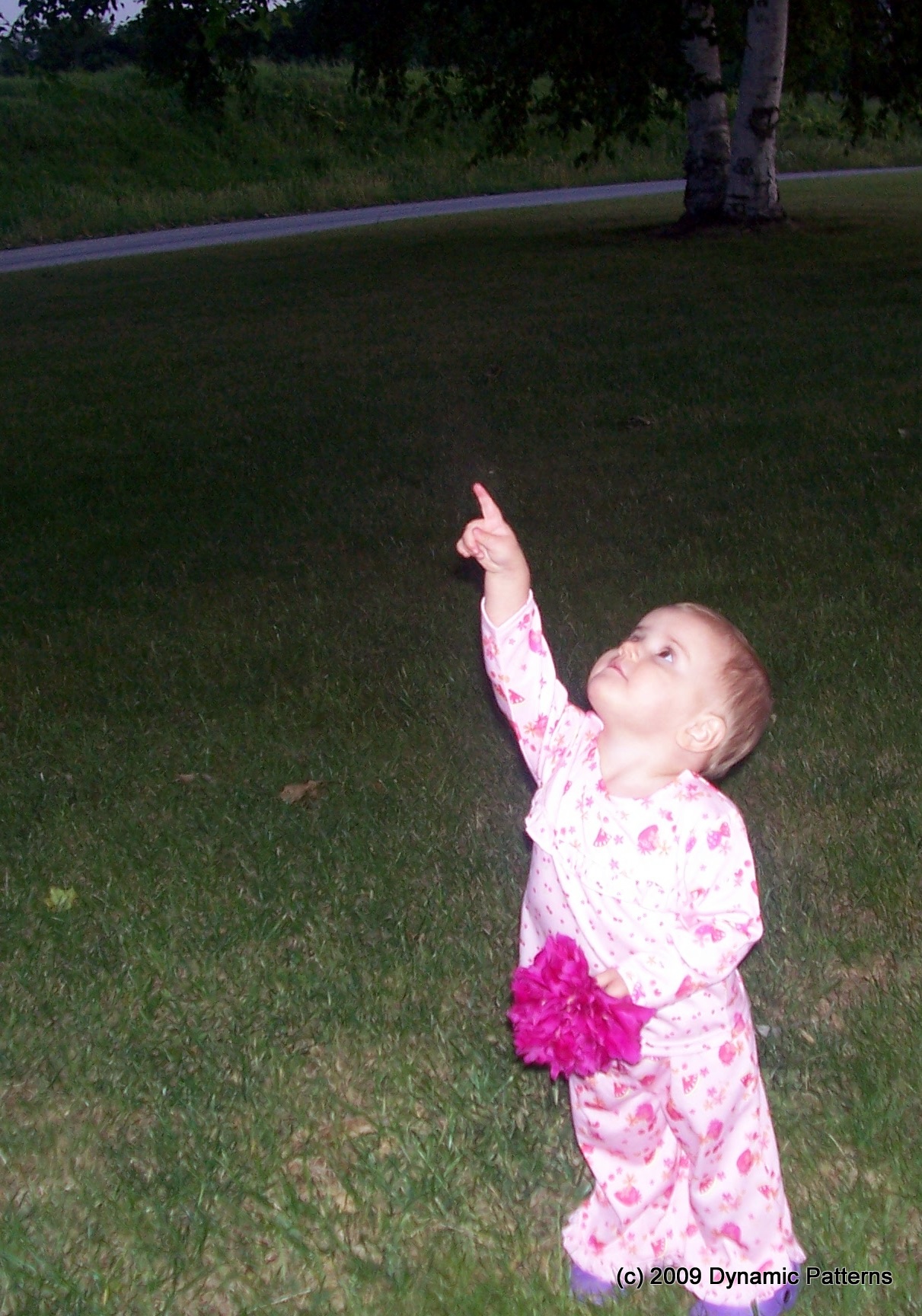
So much science education happens in informal ways–outside of the classroom. These experiences can be so valuable and sometimes even more influential than the classic approaches taken for so long by the public school system of the American culture.

Successful informal educational opportunities can start right at home between parents and their children at the earliest ages. From simple questions to make a child think about what is happening around us to getting directly involved with exciting citizen science projects in our community, there are so many opportunities that can be presented to a young mind that can leave a lasting impression.

A growing focus on the importance of informal education is emerging, and citizen scientists can be on the forefront of this valuable movement. The National Academies Press has published materials on the issue, and is helping to create new studies and information on how informal educational approaches might be more thoroughly developed.

In their latest newsletter (subscribe), NAC featured an interesting survey of readers who had experiences as a child of a lasting memory of an informal educational experience. The following are some of their favorite responses…

“‘My dad waking us all up at 2 a.m. on a freezing winter night to come out and see the Northern Lights; I was 4 years old and never forgot.’

‘Studying pond water samples with a friend’s microscope, drawing my observations, then going to the library to find the names of the microbes (amoeba, diatoms, etc.) during the summer between 3rd and 4th grade.’

‘Making an electromagnet out of a piece of wire, a nail, and a battery.’

‘The original Mr. Wizard television program set my future path toward science. Each episode presented scientific concepts through interesting and understandable demonstrations that, for the most part, the young viewer was encouraged to try at home. This was really exciting TV!’

‘The first time I learned to mix baking soda and vinegar to make carbon dioxide and the resulting foam overflowed on to my parent’s kitchen table.’

‘A lifetime of interest came from my father’s simple question: ‘Why is it so hard to push this boat into the water?’ 40 years later, I am still pursuing wave flows and resistance.’

‘Sitting on the front porch with my father and siblings counting the seconds between the lightning flash and the thunder that followed. We estimated how far away the lightning strike was and learned math as well as science.'”

Each of these special memories should be an inspiration for parents and how we can contribute to positive informal science education every day. If you and your children have experienced meaningful informal science education moments–no matter how small–please tell us about it by posting a comment here on DPR AmSci Journal.

Learn more about The National Academies Press [ VISIT ] and the National Academy of Sciences [ VISIT ]

Encouraging Science with our Children Read More »

Students from Around the World Monitor LCROSS for NASA

In a little more than two weeks, NASA will have an expensive hunk of metal slam into the Moon… the resulting plume will be closely observed in hopes to learn more about the possibility of the existence of water ice (read more and learn about how you can participate…). As the LCROSS vessel makes it way toward its impact site, NASA needs assistance with tracking due to its steep orbit; they only have brief and infrequent time frames to monitor the trajectory using their Deep Space Network of radio antennas.

So, who better to ask for more listening help than school kids from around the globe interacting remotely and on-site with the GAVRT program. Located in Apple Valley, California (view map), the antenna is a collaboration between the Lewis Center for Educational Research, NASA, and the Jet Propulsion Laboratory.

Teachers from around the world, including home schoolers, may sign up for free through the Lewis Center’s website and take part in their LCROSS curriculum. This is a wonderful opportunity for young science students to get hands-on experience in an important scientific field and to support NASA in a valuable way.

And if this program doesn’t directly create excited new young scientists, then it should certainly help drive these students’ personal interest and appreciation for science as they become vital and participating citizens in the future.

“School Kids Track LCROSS” :: Science@NASA :: September 21, 2009 :: [ READ ]

Join the Lewis Learning LCROSS Curriculum [ VISIT ]

Students from Around the World Monitor LCROSS for NASA Read More »

Dancing with the Grunion Fish

Experiencing interesting citizen science might come upon you unexpectedly in life, but it will surely have great rewards. Take a moment to read this inspiring story by a writer living in Southern California…

As a young child, Leslie spent several late summer nights dancing with and chasing back to sea a little fish called a Grunion. These odd little guys lay eggs on the beach and then have to flop their way back into the water after their mating ritual is complete. Leslie gained many fond memories of this childhood experience, and was interested again later in life when she stumbled upon an organized monitoring effort supported by Pepperdine University that established the “Grunion Greeters” to help learn about the animal’s behavior.

Her official graduation to a “real” citizen scientist was actually a proud moment–as it should be!–and her excitement and new appreciation for our universe will spread to everyone she meets.

“Greeting the Grunion” :: Daily Sound:: July 3, 2009 :: [ READ STORY ]

Learn more about the Grunion Greeters Project

Dancing with the Grunion Fish Read More »

Last updated March 17, 2026