Author name: Matthew T. Dearing

Wolfram|Alpha brings Powerful Computation to Everyone

Stephen Wolfram has spent his life to date — and will likely continue to do so — developing amazing new computational technologies to empower scientists and academics to more efficiently and effectively compute their way through their research, and even help them to make a few discoveries along the way.

Now, Wolfram and his company’s decades worth of computational development are being reimplemented into a simple user interface that is accessible to anyone who can ask a question. In particular, the ultimate goal of Wolfram|Alpha is to — simply! — “make all systematic knowledge immediately computable and accessible to everyone.” This platform is under continuous development and hopes to “compute whatever can be computed about anything.”

Pause for a moment and just think about that goal once again: “compute whatever can be computed about anything.” After soaking in these thoughts, you may now raise your jaw back into it’s closed and upright position.

This resource will be especially useful to citizen scientists who need quick references to factual data that can be trusted. (References are included with the computed results.) Moreover, an exciting feature of the output from a Wolfram|Alpha query is that it not only tries to provide you with a specific result, but it also explores the results to potentially bring you additional information, background, and even comparisons that you might not have considered in your original question.

Enter any mathematical expression, and a whirlwind of results will be presented, ask about what drugs are used to treat a medical condition, say Multiple Sclerosis (try it), ask about the temperature in your city (try it) and you’ll have current temperature and historical data graphed for you for 10 years or more, find out how much oil has been spilled in the Gulf of Mexico (try it), type in your birth date (try it) and discover not only how old you are, but other famous anniversaries and the sunrise, sunset, and moon phase for that day in history. Examples of what you could possibly discover with Wolfram|Alpha are infinite [ EXPLORE EXAMPLES ], and the results that you will find are so much more direct, powerful and efficient than what you could ever find googling random web sites.

So, I encourage you to dive in and try out this exciting resource (download the iPhone app), and consider it when you need to find real answers to your real questions while doing your real amateur research. And, if you discover something particularly interesting, please post here to let everyone experience the wonders of computation with you.

Explore Wolfram|Alpha now…
Enter your question to computer in the Wolfram|Alpha Search Box at the right column –>

Wolfram|Alpha brings Powerful Computation to Everyone Read More »

The Launch of iMatter 2.0 App

The Global Warming effort has been growing for many years now, and the youngest generation is being raised with a fundamental awareness of the concern. As many teenagers around the country become more active in their schools and communities, we might end up with an overwhelmingly disparate and random nation-wide picture for environmentally-active youth.

It is exactly this problem that a new mobile social networking application has been developed to address. The “iMatter 2.0” app for the iPhone, developed by match2blue, is a new platform to help connect the under-18 year community actively working for a future with a more secure climate.

Supported by the “Kids vs Global Warming” youth organization–founded by a 16-year-old–the app will allow connected youth activists to participate with citizen science observations, create their own local projects, and connect with other activists around the country who match their interests and efforts, all in real time.

“Launch of iMatter 2.0” :: openPR.com :: July 7, 2010 :: [ READ MORE ]

Kids vs Global Warming :: [ LEARN MORE ]

[ Download ] the iMatter App

The Launch of iMatter 2.0 App Read More »

Count Gulf Coast Ghost Crabs before the Oil Reaches the Shoreline

As the oil creeps closer to the delicate shorelines of the Gulf Coast, conservationists are frantically trying to get a clear picture of the specific status of wildlife. A reasonable baseline of population levels will be valuable when comparing to the aftereffect of nature’s interaction with the invading oil slick.

Typical news media images focus on birds soaked in oil, and efforts are already underway to update counts of our feathers friends (learn more from the National Audubon Society). There are, of course, many other creatures lurking in the beautiful white sands of the Gulf, and they, too, will likely be challenged by the oil.

Drew Wheelan of the American Birding Association has established a methodology for reporting populations of the Ghost Crabs, which are a critical element of the food chain along the coast. Monitoring the oil’s influence on these little creatures should also help develop a better understanding of how the entire ecosystem will deal with this disaster.

Citizen science volunteers from the Gulf Coast are needed immediately to support these counting efforts… so, if you live in the area please learn more and find out how to help now…

“The Ghost Crabs Of The Gulf” :: Gulf Coast Oil Spill blog from the American Birding Association :: June 21, 2010 :: [ READ ]

Count Gulf Coast Ghost Crabs before the Oil Reaches the Shoreline Read More »

Count Stars from your Backyard for Science

The 2009 Great World Wide Star Count is already under way, and there is still time to wait for a perfectly pleasant fall evening to step outside and count the stars. Through October 23, this annual citizen science event from Windows to the Universe of the University Corporation for Atmospheric Research (UCAR) will be accepting online data collection from amateurs around the world.

Using observational techniques first developed by the Greek astronomer, Hipparchus (learn more about astronomer’s magnitude scale), participants are asked to view a particular constellation–depending on your location–and estimate how many stars you can see. Based on your observations, you then make a decision, with great guidance from the activity guide, on the “Limiting Magnitude” of your night sky, which measures the faintest stars you can see.

A step-by-step activity guide is available (in eight different languages) to help make the experience easy and fun for anyone to do. Not only will this data from citizen scientists provide astronomers with important information about light pollution and other visibility issues (view the results from 2008), but it is a great opportunity for families to pique the interest of children (and interested adults!) into an appreciation for the amazing universe in which we live.

IMG_1468.JPGLast evening, I participated in the Great World Wide Star Count with my 3 1/2-year old daughter, and it was a great first introduction to constellations and just looking up. We have already attended a local star party where she was able to look through telescopes to view the Moon and Jupiter, but this project offered just another little step toward thinking more about the thousands of points of light she sees every night.

IMG_1474.JPGWe first talked a bit about how people have found patterns up in the sky, a lot like we find patterns in clouds, and went through the easy and fun tutorial on the website to help us find Cygnus, our viewing constellation. We then reviewed the activity guide’s clear illustrations to prepare us to think about how we are going to make our decision as to what our night sky’s limiting magnitude might be.
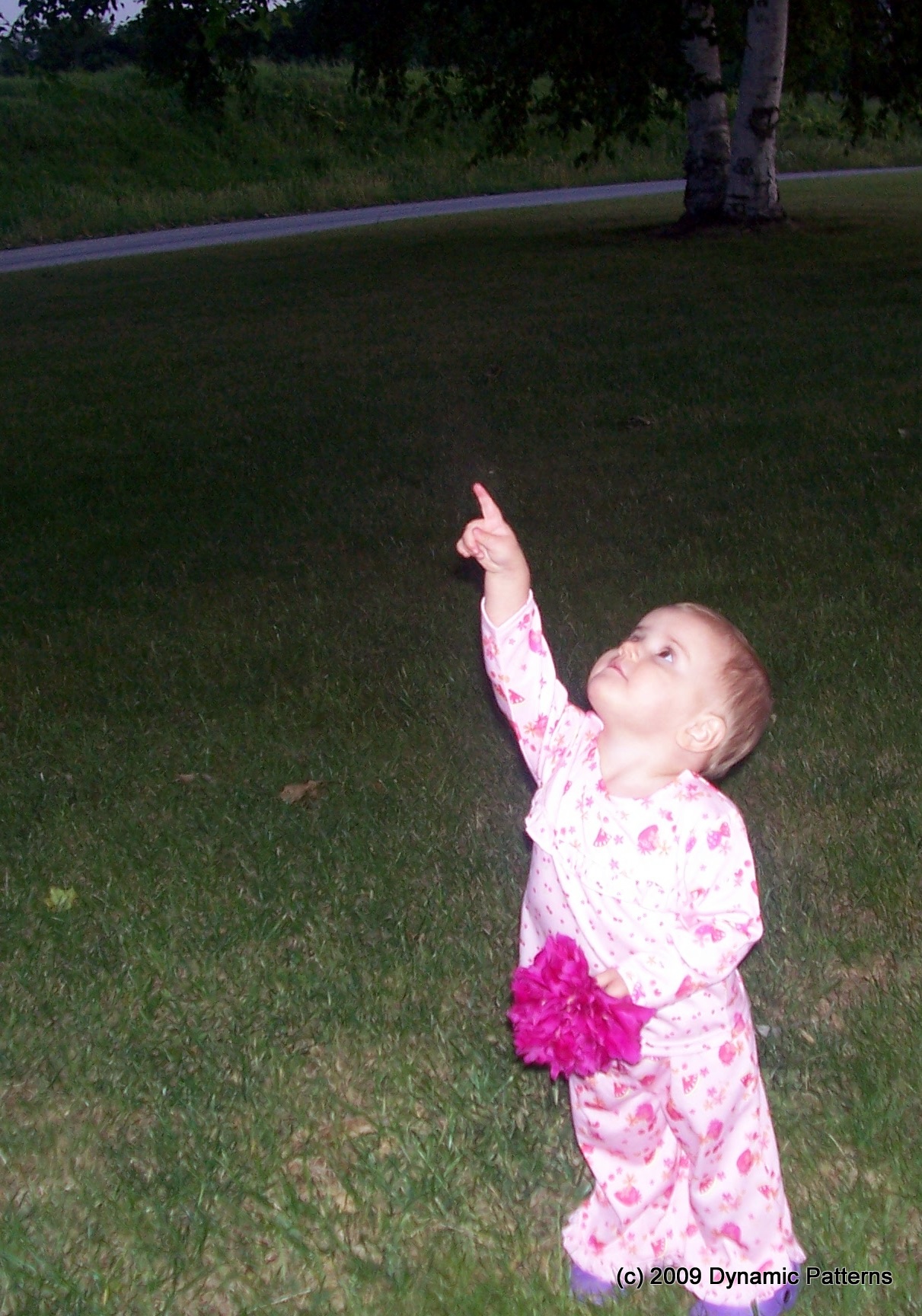
So, with just a few fun minutes of thinking about what we are about to see… and a little playing on the computer with the constellation finding tutorial (view)… we bundled up in our jacket and headed outside to spend a little quality time just looking up.

After the viewing, we came back inside, reviewed again the activity guide’s illustrations on what our night sky looked like, and together we agreed on a decision of our observed limiting magnitude. Finally, we went back to the reporting website, entered in our Latitude and Longitude and recorded our observation. Our data immediately appeared on the featured map, and it was cool to see our point with the hundreds of others from around the world.

There are only a few days left, so go outside and count the stars in your night sky tonight with the Great World Wide Star Count!

The Great World Wide Star Count :: [ PARTICIPATE NOW ]

Count Stars from your Backyard for Science Read More »

European Amateur Science Society Makes Major Dinosaur Discovery

For several years, a European amateur science group was on the trail of dinosaur prints and last spring they made a significant discovery. Now authenticated by scientists at Lyon University and France’s National Center for Scientific Research, the find is one of the largest and most well preserved prints from a sauropod estimated to be 150 million years old.

What’s particularly exciting about this finding–in addition to the pure excitement from being able to directly witness the movements of our planet’s once great giants–is that the possibility of important scientific progress coming from groups of amateurs and citizen scientists is so great. More organized citizen scientist groups must be developed around the world, and with this growth not only will scientific progress benefit, but the increased appreciation and understanding of science will begin to reach an even broader population.

For example, in the United States, the Society of Amateur Scientists is a national organization that will support the development of local and regional chapters, which is the absolute perfect opportunity for interested people to self-organize and generate some real science and generate some real science appreciation for the masses. Their current list of active local chapters is rather limited, but the time is ripe for growing local interest and regional society groups to become deeply involved in citizen science around the country.

In particular, this author is working on establishing a local chapter for the Central Illinois region, so if you are located in the area and would be interested in considering being a charter member of a new local chapter, please let me know.

Be inspired by the increasing number of successes of important results from citizen scientists and get more involved to see what wonderful science you may discover and experience.

“”Unique” dinosaur footprints discovered in France” :: Reuters / AP :: October 6, 2009 :: [ READ ]

European Amateur Science Society Makes Major Dinosaur Discovery Read More »

Encouraging Science with our Children

So much science education happens in informal ways–outside of the classroom. These experiences can be so valuable and sometimes even more influential than the classic approaches taken for so long by the public school system of the American culture.

Successful informal educational opportunities can start right at home between parents and their children at the earliest ages. From simple questions to make a child think about what is happening around us to getting directly involved with exciting citizen science projects in our community, there are so many opportunities that can be presented to a young mind that can leave a lasting impression.

A growing focus on the importance of informal education is emerging, and citizen scientists can be on the forefront of this valuable movement. The National Academies Press has published materials on the issue, and is helping to create new studies and information on how informal educational approaches might be more thoroughly developed.

In their latest newsletter (subscribe), NAC featured an interesting survey of readers who had experiences as a child of a lasting memory of an informal educational experience. The following are some of their favorite responses…

“‘My dad waking us all up at 2 a.m. on a freezing winter night to come out and see the Northern Lights; I was 4 years old and never forgot.’

‘Studying pond water samples with a friend’s microscope, drawing my observations, then going to the library to find the names of the microbes (amoeba, diatoms, etc.) during the summer between 3rd and 4th grade.’

‘Making an electromagnet out of a piece of wire, a nail, and a battery.’

‘The original Mr. Wizard television program set my future path toward science. Each episode presented scientific concepts through interesting and understandable demonstrations that, for the most part, the young viewer was encouraged to try at home. This was really exciting TV!’

‘The first time I learned to mix baking soda and vinegar to make carbon dioxide and the resulting foam overflowed on to my parent’s kitchen table.’

‘A lifetime of interest came from my father’s simple question: ‘Why is it so hard to push this boat into the water?’ 40 years later, I am still pursuing wave flows and resistance.’

‘Sitting on the front porch with my father and siblings counting the seconds between the lightning flash and the thunder that followed. We estimated how far away the lightning strike was and learned math as well as science.'”

Each of these special memories should be an inspiration for parents and how we can contribute to positive informal science education every day. If you and your children have experienced meaningful informal science education moments–no matter how small–please tell us about it by posting a comment here on DPR AmSci Journal.

Learn more about The National Academies Press [ VISIT ] and the National Academy of Sciences [ VISIT ]

Encouraging Science with our Children Read More »

Last updated June 20, 2022